Custom Business Software
Software Built Around
How You Actually Work.
Off-the-shelf tools make you change your process to fit them. We build the application your workflow already needs — the portal, the dashboard, the internal tool — and connect it to the systems you run today.
- You own the code and the data
- Built on your process, not a template
- Handed over documented, not locked in
What We Build
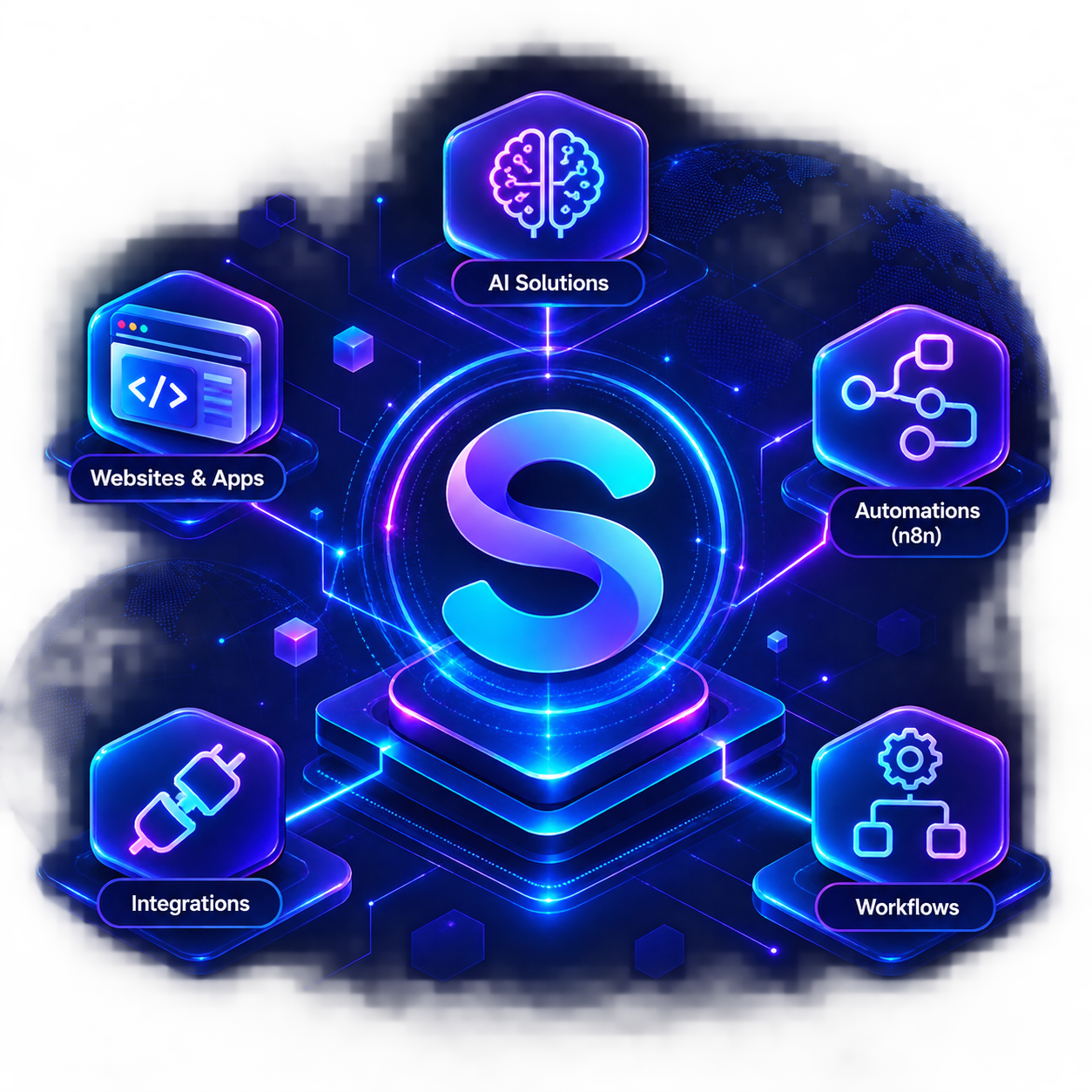
Five Things We Get Asked For Most
Each of these replaces something a team is doing by hand, in a spreadsheet, or in a tool that never quite fitted.
Custom Web Applications
The application your business runs on, built to your process rather than bent to fit someone else’s. Role-based access, approvals and reporting included rather than bolted on.
Client Portals
Give customers one place to see their own data, submit work and track progress — without emailing your team.
Internal Tools & Dashboards
Replace the spreadsheet everyone shares. One place your team sees and acts on the same numbers.
SaaS Development
Multi-tenant products with billing, onboarding and admin — from first release to something you can sell.
API Integrations
Make the systems you already pay for talk to each other, so data stops being re-typed.
How We Build
Four Phases. No Six-Month Silence.
Short cycles with a working environment you can log into throughout, so the first time you see it is not the day it ships.
- 01
Scope
We map the process the software has to support, and agree what the first release must do — and what it deliberately will not.
You get: a written scope and a fixed price for phase one
- 02
Design
Screens and data model before code. You see it working as a clickable flow while it is still cheap to change.
You get: wireframes and a data model you have signed off
- 03
Build
Built in short cycles against a staging environment you can log into at any point.
You get: a staging URL, updated every cycle
- 04
Handover
Deployed, documented and handed over — code, credentials and a walkthrough. Support continues only if you want it.
You get: repository access, deployment docs, a recorded walkthrough
Ownership & Handover
You own what we build.
Custom software is only an asset if you can take it elsewhere. Everything we write is yours from the first commit, and we design the handover before we design the app.
- Full source code and repository access, throughout — not at the end
- Your infrastructure or ours, your choice
- EU and Swiss hosting options, GDPR and FADP aligned
- Documented deployment, so another team could pick it up
How It Is Built
Boring Technology, Deliberately
Chosen so another developer can pick this up in three years, not because it is new.
-
Application
- WordPress
- PHP
- Python
-
Data
- PostgreSQL
- MySQL
-
Automation
- n8n
- REST APIs
-
Infrastructure
- Docker
- AWS
- EU & Swiss hosting
Before You Ask
The Five Questions We Always Get
How long does a custom build take?
Phase one is usually six to twelve weeks depending on scope. The price is fixed once the scope is written, so the number does not move afterwards.
What if requirements change mid-build?
They will. That is what the short cycles are for — changes go into the next cycle, and anything that moves the scope is re-quoted before it is built, not after.
Do we own the code?
Yes, from the first commit. Repository access is yours throughout, not handed over at the end.
Where is our data hosted?
Your infrastructure if you have it, ours if you do not. EU and Swiss hosting are available, and data residency is agreed before anything is built.
What happens after launch?
A support arrangement if you want one, a documented handover if you do not. Nothing is written so that only we can maintain it.
Not sure custom software is the right answer?
Tell us the process that is costing you time. We will tell you whether building something is worth it — including when it is not.